Index of content
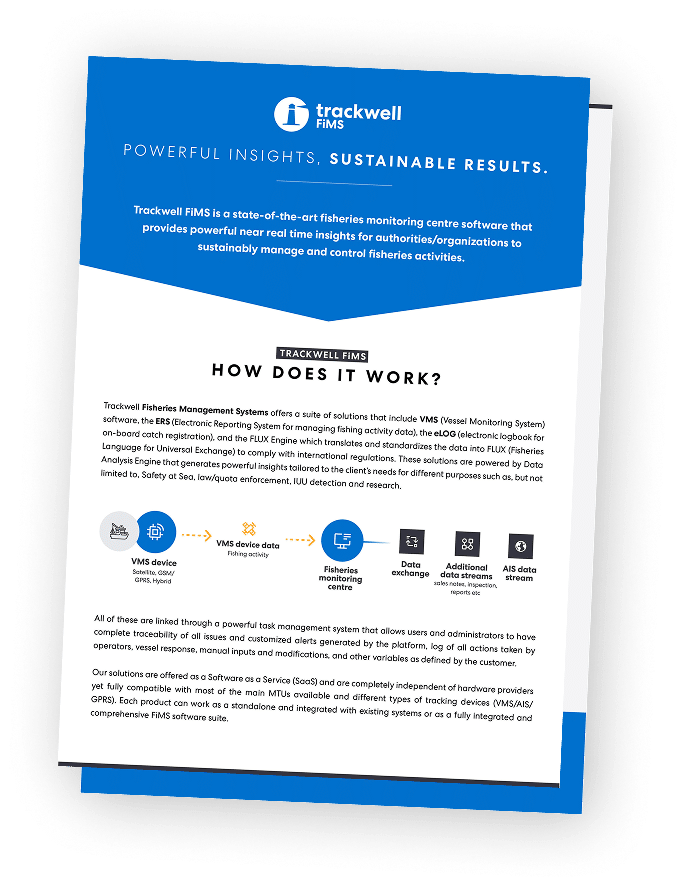
As global fisheries management becomes more data-driven, countries and RFMOs are adopting the Fisheries Language for Universal Exchange (FLUX) as the standard for sharing fisheries information across borders. For fisheries authorities, FLUX data exchange is now the most reliable way to cooperate internationally. FLUX creates a common digital language for fisheries reporting. It covers vessel activity, fishing operations, catch, and authorizations. The result is cooperation that is faster, more transparent, and far more reliable than traditional formats.
Trackwell was an early adopter of FLUX, and today our FLUX Engine is used operationally by Malta, Cyprus, and the NEAFC Secretariat to send, receive, and validate fisheries data in real time. With more nations moving toward FLUX compliance, the need for a proven, stable solution has never been greater.
Why Fisheries Data Sharing Needed a Common Language
For many authorities, sharing data with neighbours and RFMOs traditionally required custom formats, manual corrections, or bilateral agreements. FLUX data exchange removes these barriers by standardizing:
- Message formats – one structure all authorities can use
- Data structures – consistent organisation of fisheries information
- Validation rules – shared criteria for checking data accuracy
- Communication channels – secure connections between authorities
This gives authorities a shared platform for cooperation, enabling real-time oversight of fishing activities and better support for sustainable management.
Implementing FLUX Data Exchange for Fisheries Authorities
Although FLUX can seem technical from the outside, the path to implementation is much smoother than many authorities expect. It usually starts with a conversation about which FLUX domains will be needed. FLUX covers a wide range of fisheries information including Vessel information, Fishing Operations (FA), Accumulated Catch Data (ACDR), Master Data Management (MDM), Sales and Production, Landing and Transport, and Licensing and Authorizations. Each authority chooses the domains that fit its operational and reporting needs.
Once that scope is clear, the first practical step is preparing local systems so they can map their existing data into the FLUX structure. This is where authorities typically begin local testing, checking message formats and running validations before any international connection is made. Doing this manually can be slow, which is why Trackwell FiMS’ FLUX Engine automates much of the process, turning what often takes months into a far quicker and more predictable setup.

With the local side ready, the next phase is establishing the international connection with the EU or the relevant RFMO. This includes setting up secure communication channels, exchanging certificates, and sending test messages across all required domains. Having a system that has completed these tests many times before makes a noticeable difference, and Trackwell supports customers through each step to ensure full compliance.
Once everything is approved, the system goes live, and FLUX messages start flowing automatically. This is when the benefits become immediately visible: structured, validated information shared seamlessly across borders. It’s the same type of setup Trackwell FiMS provides to Malta, Cyprus, and NEAFC, where FLUX exchanges are part of daily operations.
Because FLUX continues to evolve with updated domains and business rules, Trackwell also monitors these changes and maintains customer systems so they remain compliant over time.
Trackwell’s FLUX Data Exchange in Practice
Trackwell was an early adopter of the FLUX standard. Our FLUX Engine was built early, tested early, and deployed early, giving us years of operational insight into what authorities actually need. With Trackwell, clients save up to 90% of time and resources on each FLUX domain implementation. Integrated directly into the Trackwell FiMS suite, it provides a dependable and future-ready solution for modern fisheries management.
As more countries move toward digital cooperation, FLUX data exchange is becoming the backbone of cross-border fisheries governance. Trackwell helps authorities adopt this standard quickly, safely, and with confidence.