Index of content
Fisheries compliance is changing fast and 2026 is shaping up to be a pivotal year. Across regions and Regional Fisheries Management Organizations (RFMOs), regulators are moving decisively toward fully digital monitoring and reporting systems that strengthen transparency, sustainability, and international cooperation. At Trackwell, we’re closely following these developments, with the aim of helping our partners to stay ahead.
Regulatory Trends in Fisheries Monitoring
The shift toward digital compliance is being driven by three major developments currently reshaping how fisheries authorities operate. Remote Electronic Monitoring is moving from pilot to requirement, cross-border data exchange is being standardized through FLUX, and electronic logbook adoption is accelerating globally. Together these trends are redefining what effective fisheries compliance looks like in practice.
The Rise of Remote Electronic Monitoring (REM)
After years of pilot projects, Remote Electronic Monitoring (REM) is becoming an essential compliance tool. Authorities are now moving from trial to implementation, requiring onboard cameras and sensors to verify catch handling, discards, and protected species interactions.
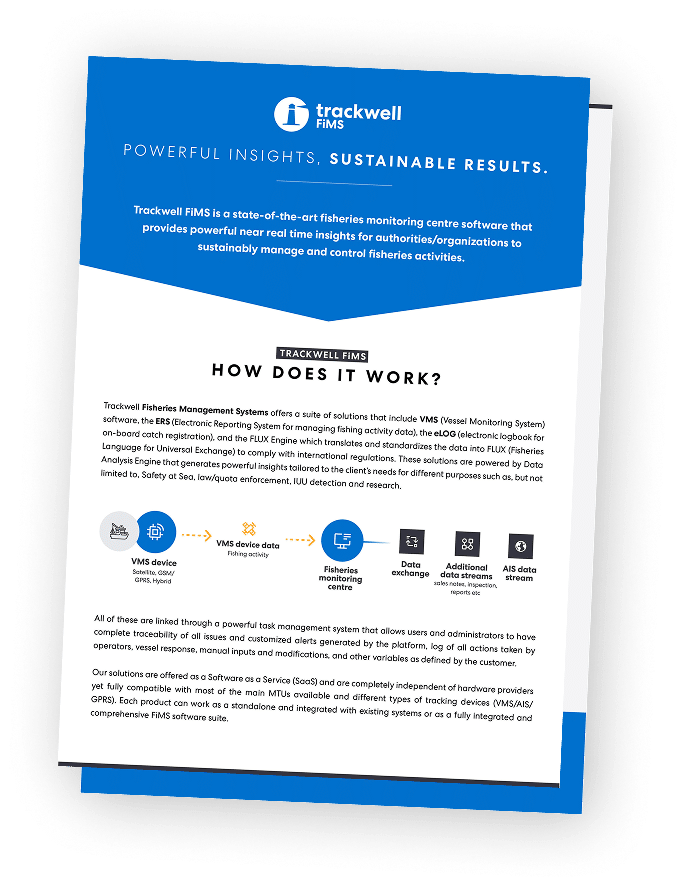
Trackwell FiMS is REM-ready. Through close cooperation with REM hardware and video analytics vendors, our VMS and ERS solutions are being aligned and integrated for seamless data exchange and event handling. Several collaborative projects are already in motion and demo versions are being developed, ensuring that our clients can easily integrate REM data within their existing fisheries monitoring workflows.

Seamless Data Exchange Across Borders and International Organizations
Another defining trend in fisheries compliance is the growing push for cross-jurisdiction data exchange. The FLUX Communication Engine (Fisheries Language for Universal eXchange) standard is now becoming the global default for information sharing between authorities.
Trackwell was an early adopter of FLUX, and our systems are already fully equipped to operate in this new environment. Our clients including Malta, NEAFC, and Cyprus are fully FLUX compliant, routinely receiving, processing, and forwarding fisheries data across borders. This level of data transparency is essential for closing the gaps that IUU fishing exploits. As FLUX adoption expands among RFMOs, these implementations stand as proof of Trackwell’s readiness for a more connected, interoperable future.
National Electronic Logbook Modernization
Alongside international developments, many national authorities are also strengthening their electronic logbook (eLOG) requirements. Governments are recognizing that timely, structured digital reporting is not just about fisheries compliance. It is about better data for management, sustainability, and enforcement. Trackwell’s eLOG solution is designed to meet these evolving needs, helping fisheries of all scales transition from paper to efficient, digital data collection.
Looking Ahead to Fisheries Compliance in 2026
Regulatory change is accelerating from remote monitoring and digital traceability to international data standardization. For Trackwell, our partners and customers, these developments represent opportunities to further progress in digital fisheries management. By continuing to align our solutions with emerging standards and collaborating with regulators, REM partners, and fisheries authorities worldwide, Trackwell is shaping a future where compliance, sustainability, and technology work hand in hand.